Celebrating Success: Global Food System Leadership Shines
Nearly a decade ago, faculty and administrators from the College of Agriculture and the Staley School of Leadership began discussing an interdisciplinary program between the two schools. The College put forward the idea of a program that takes a broader view of agriculture, showing students more food systems than those in the United States. From this, the Global Food Systems Leadership program was born.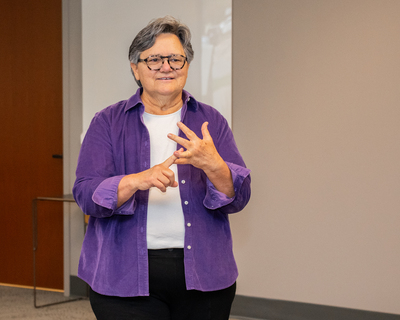
GFSL Program Director Dr. Mary Kay Siefers said she wanted the curriculum to dive into topics deeper than production and processing.
“[Kansas agriculture is] in the business of providing high-quality nutrition to not only people in the United States, but people around the world,” Siefers said. “We wanted to give students the opportunity to learn about food beyond production and processing, and learn more about transportation, utilization, poverty, sustainability and infrastructure through a systems thinking perspective.
“We don’t focus on just Kansas or the United States. We think about how systems work in places like Bangladesh or Paraguay. We want to give more of a world view.”
Through the creation of the program, Siefers found out how loyal the agriculture students were.
“They’re very loyal to the agriculture industry, and students want to be involved and think about how they can serve humanity,” she said. “We saw students really involved in production agriculture, but wanting to be more involved in the food system. We listened to them.”
The first year that GFSL was offered at K-State, Siefers and her team were unsure if students would be interested in the program. But as the semester started, the first core group of students joined, and they were the most passionate about food security.
“We probably didn’t talk about food security very much at the beginning,” Siefers said. “But the feedback we got from our students is that they care about their neighbors. They want them to have enough food. 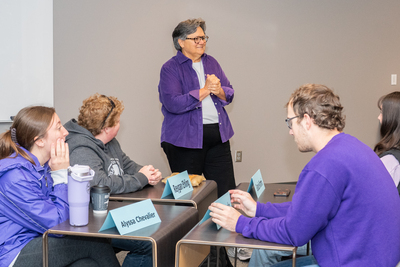
“We produce a lot of food in the United States and still have really unacceptable rates of food insecurity. What we saw was students coming in, caring a lot about agriculture, caring a lot about production, but also understanding the value of service to their community.”
The formative beginning of the program helped change the curriculum into what it is now. With a heavier emphasis on local and global food security issues, student perspectives are widened further.
“These students really want to make a difference in the world through agriculture, and not just focusing narrowly on farmers or ranchers. They want the food that they produce to feed people, want it to be healthy and want their neighbors to live with dignity.”
The “why” of the program and its impact on students is something important to Siefers.
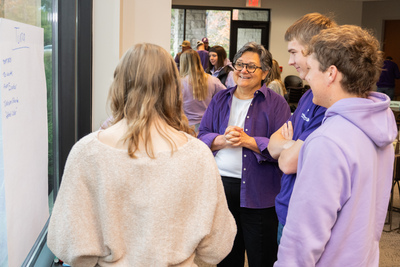 “A lot of students in the College of Ag have had leadership experiences. In GFSL, we take that leadership and apply it to the system,” Siefers said. “Short-term, it gives students something to distinguish themselves on a resume. It’s a talking point to build a connection with a potential employer. But long-term, it gives students an opportunity to connect what they learn in agronomy, animal science, sociology or psychology to systems thinking.
“It benefits students because we don’t have a narrow view. I teach students that curiosity is way more important than any opinion they could have. We work a lot on curiosity and understanding how a change in one part of the system impacts another part of the system.”
Looking to the future, Siefers wants to see a few changes made to the program.
“We would love for [GFSL] to be a major, because we think there are a lot of students that come from urban areas and care about food systems or agriculture, but don’t know much about it,” Siefers said. “What we’re hoping is to make it a pulling card to K-State… students may not have a close connection to agriculture, but they want to learn.”