When Fire Isn't Enough: How Goats Can Help Control Cedars
By Logan Thompson, Director of Rannells Ranch and Assistant Professor/Extension Specialist of Sustainable Livestock Feeding
Eastern red cedar encroachment is a familiar challenge for producers across the Flint Hills. Several factors contribute to its spread, including landscape fragmentation, less frequent prescribed fire, and changes in how land is managed. These issues can build on one another. As cedar becomes more established, prescribed burning can become more difficult, or risky, allowing woody vegetation to gain an even stronger foothold.
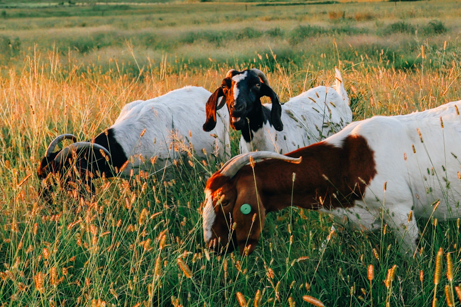
When prescribed fire is limited, producers may need other practical and economical options for controlling cedar. One strategy that has received less attention in Kansas is mixed-species grazing.
Goats can complement cattle because they prefer to browse woody plants and other vegetation that cattle are less likely to consume. Red cedar can be a part of that diet, particularly when goats are used as a targeted grazing tool. In Texas, researchers have even selected lines of Spanish goats for their tendency to consume Juniper, prioritizing browsing behavior over traditional production traits. Research in Kansas has also shown that combining browsing with fire can help reduce woody plant cover and create opportunities for native grasses and forbs to recover.
Ways to Put Goats to Work
There are several ways goats can be incorporated into a grazing system depending on the producer’s goals. In a comingled system, goats and cattle graze the same pasture at the same time. This can work well in areas with both grass and woody vegetation because cattle primarily use the grass while goats browse shrubs and trees. Comingling may also offer added protection, as the presence of cattle can help deter coyotes and other predators.
Another option is lead-follow grazing, where one species, often cattle, grazes an area first then goats follow behind to use the remaining vegetation. This approach can give producers more control over which types of vegetation are being used and how much grazing pressure is applied.
For areas with heavier red cedar encroachment, goats can also be used for targeted grazing. In these systems, goats are concentrated in smaller areas at higher stocking densities for short periods of time, often a few days to two weeks. The goal is to increase browsing pressure on young cedar trees before moving the animals to another area.
Producers do not necessarily have to own goats to use this strategy. Custom goat grazing services are available in some areas and may provide the animals, fencing, and daily care. This can help producers overcome one of the biggest challenges of incorporating goats into a cattle operation: having fencing that can safely contain both species.
Goats are not a replacement for prescribed fire, but they may provide another management tool in areas where burning is difficult or cannot occur as frequently as needed. Used strategically, mixed-species and targeted grazing could help producers slow red cedar encroachment, recover usable forage acres, and support the long-term health of Flint Hills grasslands.