Why Cattle Graze Where They Do: Understanding Grazing Preference on Pastures
By Colin Tobin, Associate Director of Rannells Ranch and Assistant Professor of Range Management
Anyone who has spent time watching cattle quickly realizes that grazing is not uniform. Some cattle rarely lose sight of the streambank, while others express their inner mountain goat. Certain patches and plants are heavily selected, while neighboring areas remain nearly untouched. These grazing preferences are not random. Instead, they are shaped by both biotic and abiotic factors.
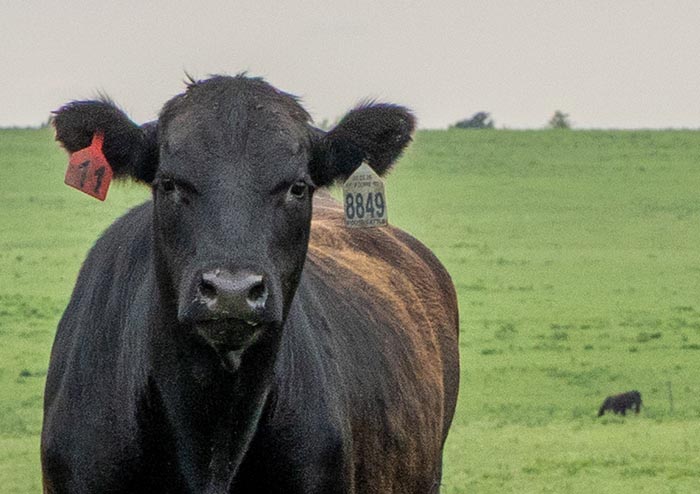 Grazing distribution is a major management concern in drier environments, where uneven use can negatively affect range condition and utilization. From an energy standpoint, cattle graze more efficiently near water sources than on steep slopes. Cattle make grazing decisions hierarchically, with distance to water, slope, and forage quality influencing each bite. In general, cattle spend more time in areas that provide greater grazing opportunities while avoiding areas with lower forage availability or quality.
Grazing long distances from water can substantially reduce carrying capacity. The rule of thumb when calculating stocking rate is that areas one to two miles from water require 50% reduction in grazing capacity, while areas greater than two miles from water require 100% reduction. Vertical distance to water can further influence carrying capacity. Developing additional water sources may improve pasture utilization while reducing grazing pressure around riparian areas.
While topography and landscape features influence behavior, forage quality and plant chemistry play major roles in selection. Livestock constantly balance nutritional reward against negative consequences through their ability to distinguish nutritious from toxic plants. Many shrubs, forbs, and invasive plants contain secondary compounds such as tannins, terpenes, and alkaloids that create aversive post-ingestive feedback. Positive eating experiences encourage future intake, while negative experiences reduce selection.
Sericea lespedeza is a prime example across much of Kansas. While it provides adequate nutrition, high concentrations of condensed tannins often deter utilization and reinforce avoidance behavior. As a result, cattle frequently graze around sericea patches while repeatedly selecting neighboring grasses and forbs. Over time, these grazing patterns can influence plant community composition and contribute to the persistence or spread of invasive species on rangelands.
Learning is also a critical component of grazing preference. Calves exposed early in life to diverse diets are often more willing to consume novel plants later in life. Social interactions within a herd also play a major role in shaping grazing behavior, as inexperienced animals frequently learn forage preferences from older herd mates and their dams. As researcher Bennett Galef noted in 1986, conditioned food aversion is the strongest experimental tool for modifying diet selection, but social facilitation can extinguish even the most powerful aversions.
This is especially evident in the Flint Hills, where experienced and naive stocker cattle are often turned out together onto highly productive tallgrass rangelands capable of supporting average daily gains exceeding two pounds per day. This social transfer of grazing behavior demonstrates that cattle preference is influenced not only by forage quality and landscape features, but also by herd dynamics and learned experience.
Ultimately, grazing preference is best understood as a product of biology, experience, and environment. Animals do not graze randomly, and understanding why livestock choose certain plants and locations can help producers improve grazing distribution, forage utilization, and overall rangeland health.