Fall 2026 Ranch Update
Grazing Season in Review: What’s Happening at Rannells Ranch
By Logan Thompson, Director of Rannells Ranch and Assistant Professor/Extension Specialist of Sustainable Livestock Feeding
As I sit and write in 100-degree heat, it is difficult to believe that summer is giving way to fall, and cooler temperatures are around the corner. With that transition, our summer grazing season has come to an end, and those of us at Rannells Ranch are moving into a slower period of data analysis, along with repairing the wear and tear that more than 1,300 stocker steers can leave on ranch infrastructure.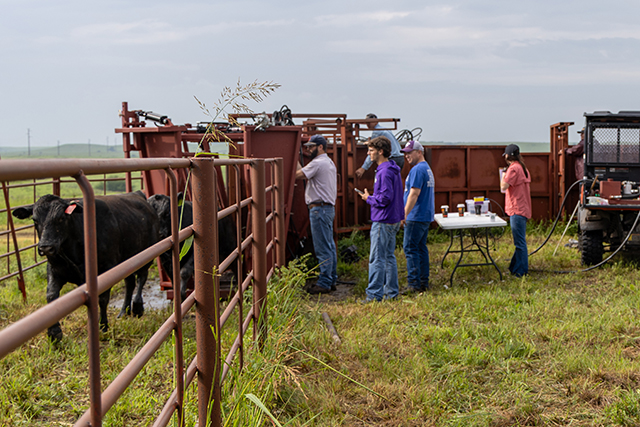
It was a successful summer of research. We completed four cattle trials, conducted producer and stakeholder research to help inform future activities, and worked on several other projects you will read about throughout the newsletter.
One project I am particularly interested in seeing results from is led by Rannells Ranch associate director, Colin Tobin. Using GPS ear tags, Tobin monitored cattle behavior and grazing patterns throughout the summer. The data could provide valuable information for producers in the upcoming months.
This summer, we were fortunate to receive cattle from numerous states across the country, and we observed noticeable differences in grazing patterns. Compared with previous years, cattle appeared to grazed hillsides more frequently, raising questions about how those patterns could influence cattle performance and prairie health over time.
Previous research has shown geographic source can affect average daily gain in stocker cattle. One study conducted on shortgrass prairie in Colorado, reported a reduction of more than 33% average daily gain among cattle unfamiliar with the environment compared with locally sourced steers. Exploring our GPS data will help us better understand how cattle origin may influence not only performance but also how animals use pastures over time.
We also explored the energy requirements of grazing steers, an area of nutrition that remains relatively understudied. Our observation suggest maintenance energy requirements may be approximately 20% to 25% higher than recommended values. However, providing one pound of an energy supplement during the late grazing season reduced that requirement by about 5%. Using less energy for maintenance may have contributed to the additional 0.25 pound of daily gain observed in supplemented steers.
There are still plenty of exciting things ahead during our “slow” season. We look forward to welcoming producers and partners to hear graduate student, Emerson Tarr, led by Nellie Hill-Sullins, share findings from her summer research. Together, these efforts will help us continue learning how Rannells Ranch can better support Flint Hills producers from both cattle production and rangeland management perspective.