Helping Research Reach the People It Serves
By: Emerson Tarr
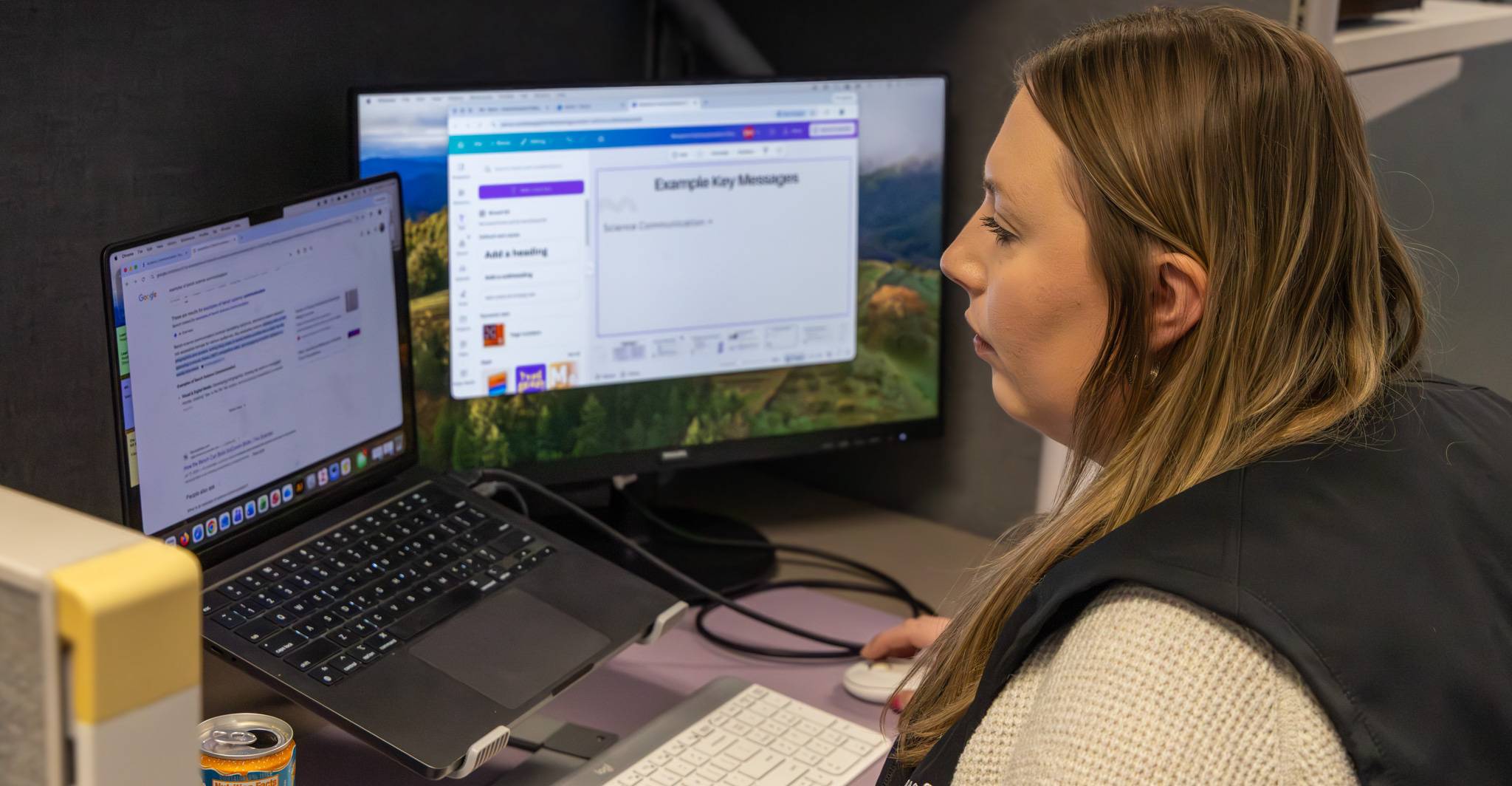
Rannells Ranch is becoming a place where science communication is intentionally practiced with research. A developing workshop is designed to help faculty and researchers share their work more effectively with producers, land managers, and communities. The program focuses on helping scientists translate their research into information that audiences beyond the university can understand and apply. “Seeing research come to life after a conversation with a producer is incredibly valuable and rewarding,” said Mikayla Hargis, a PhD student in leadership communication at Kansas State University.
The workshop grew out of science conversations with faculty and collaborators involved in rangeland and natural resources. After a Rannells Ranch collaborators event, organizers conducted a survey to understand better how researchers felt about engaging in public science communication. The results revealed many faculty members value outreach but feel they lack the time, resources, or confidence to do it well.
“We conducted a survey with faculty and found they needed more time, funding, and communication skills to engage in science communication,” says Hargis, who is helping develop the program. “By building these workshops, we hope to give them the tools to better engage with the communities they serve.”
Those findings helped shape the development of the workshop. Instead of focusing solely on communication, the workshops emphasize practicing skills faculty can use directly in outreach, extension work, and public engagement.
“We are working on building those foundational communication skills that not every program has in their curriculum,” Hargis said. “By providing faculty members with this resource, it’s a step toward giving them the skills and resources they need to share their research with the public.”
Developing the training has also been a collaborative effort across departments and disciplines. Faculty, graduate students, and researchers from areas such as animal science, agronomy, and natural resources contribute their perspectives to help shape the program.
“We’re really taking a multidisciplinary approach,” Hargis said. “We’re working with our science communication team, but also reaching out to faculty in other departments and peers who are experts in this field.”
Through this process, the goal is to help researchers connect their work with real-world decision-making. For ranchers and land managers, research becomes meaningful when it directly informs the choices they make on their operations.
“Ranchers and land managers have to make decisions every single day about their operations,” Hargis said. “Providing them with the science we’re doing here allows them to be more confident in those decisions.”
Ultimately, the workshop is meant to strengthen the connection between research and the community. For Hargis, building communication skills is one way researchers can better share their work with the people it impacts most.
“By providing faculty members with these skills and resources, we can help them share their research more effectively with the public,” she said.