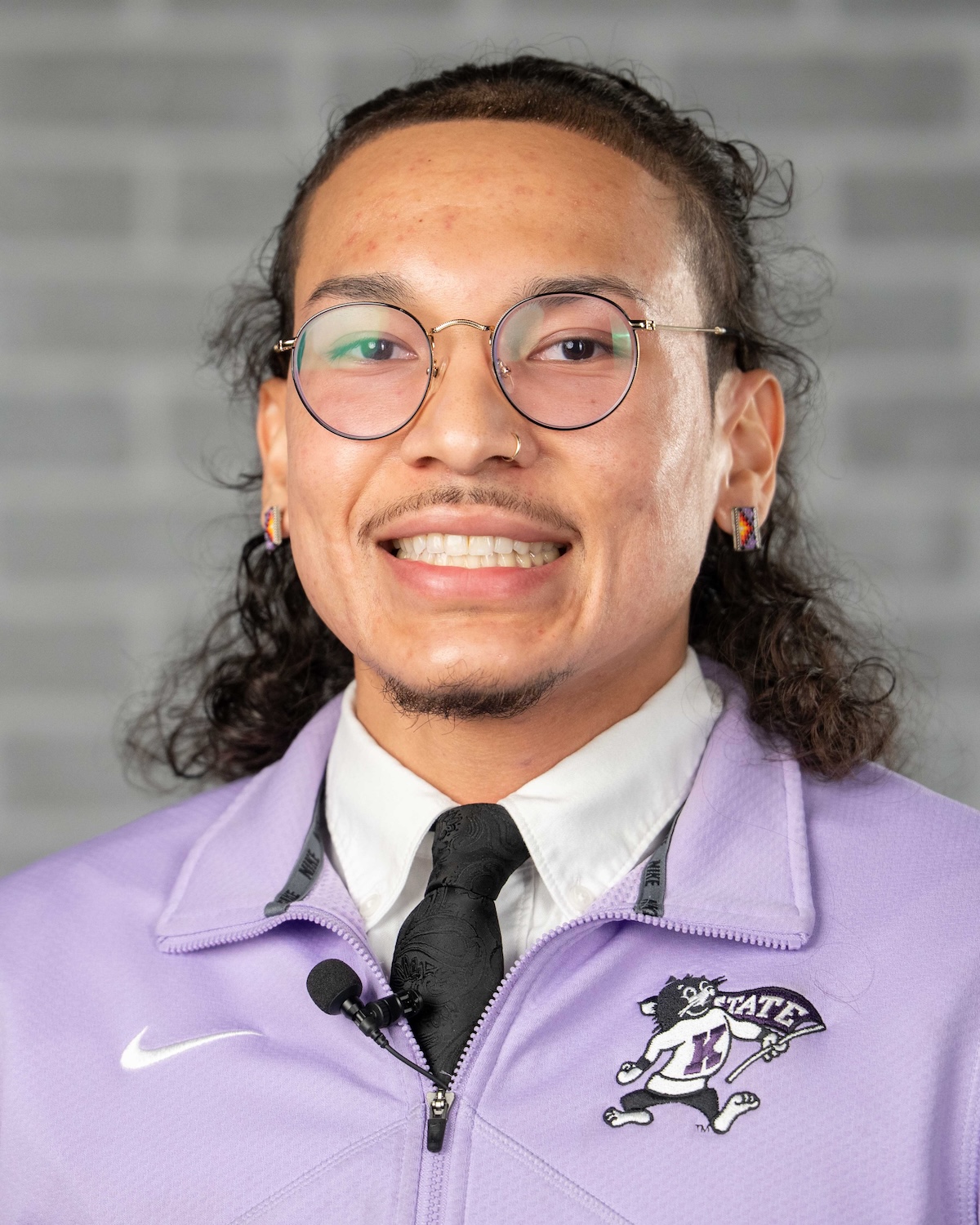
Meet Kanyon Alexander: Cultural influences drive a passion for sustainability
Major: Master’s in Agricultural Economics
Expected graduation year: Spring 2027
Hometown: Topeka, KS
The transition to K-State for graduate school in the College of Agriculture would not have been on a BINGO card for Kanyon Alexander when he was growing up in Topeka, Kan. While not far from Manhattan, he hadn’t considered K-State or an agricultural program until he met professors representing the K-State MANRRS chapter while he was an undergrad.
Alexander’s K-State journey began after a conversation with the advisors who were on campus promoting graduate school in the K-State College of Agriculture at Haskell Indian Nations University, where he was studying business administration with an emphasis in management. Later, Dr. Lonnie Hobbs, a MANRRS advisor and Agricultural Economics professor, was paired with Alexander through the K-State Research and Extension Research Fellowship program and Hobbs now serves as his major professor.
“I was really able to find myself during my undergrad program, and understand that I have to invest in myself, really put myself out there and not be afraid to do things that I'm uncertain of because when you take that leap of faith, step into those doors that are open but are still dark on the inside, you really start to find a light and you show the light that comes out within you,” he reflected.
Now, Alexander is driven by finding opportunities to help people through his research and eventual career path. He stressed the importance of being aligned with the mission of his future professional industry. “In agriculture, the foundation is that we need to feed people—and there are so many communities around the world, but also in the US that are struggling with food insecurity and they deserve special attention.”
Finding community at K-State
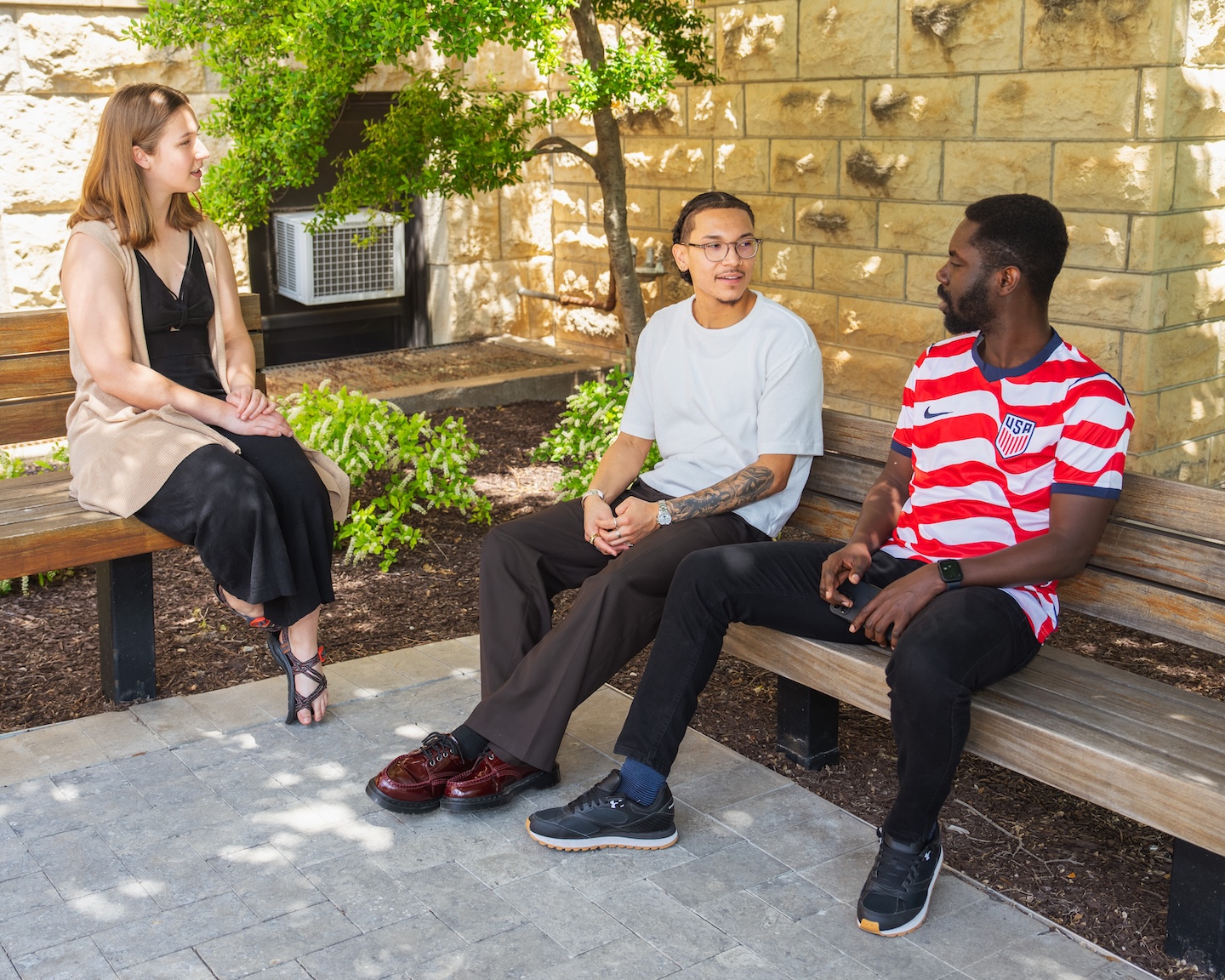
While he pursues his interests in serving communities near and far, Alexander says a sense of connection was what helped him find his own community at K-State. He quickly became involved in MANRRS, and the organization has remained a significant part of his graduate program experience, offering networking, leadership development and connections within the industry.
“Everybody seems to have a true intention to get to know me on a personal level,” he said when speaking about K-State. “Obviously, I’m here for school, but I'm also a person. It's been nice to feel those connections and the genuineness in the people here that have made me feel at home.”
Alexander has also found community through leadership involvement with the Graduate Student Council, where he hopes to help bridge connections between graduate students across disciplines. Those leadership experiences have reinforced his belief that collaboration across backgrounds and expertise creates stronger solutions.
“We share these same core ideas as grad students across the boundaries between departments,” he said. “It’s powerful for me to know that there are people who have the same mindset as me but are in different areas.”
While the graduate students may be focusing on different subject matter, Alexander appreciates the opportunity to join together, especially to support a cause like food insecurity.
“When you get a lot of people together who share a central idea, you can make a change,” he said. “It’s the 1% change that’s going to make a big difference.”
Personal passions drive educational pursuits
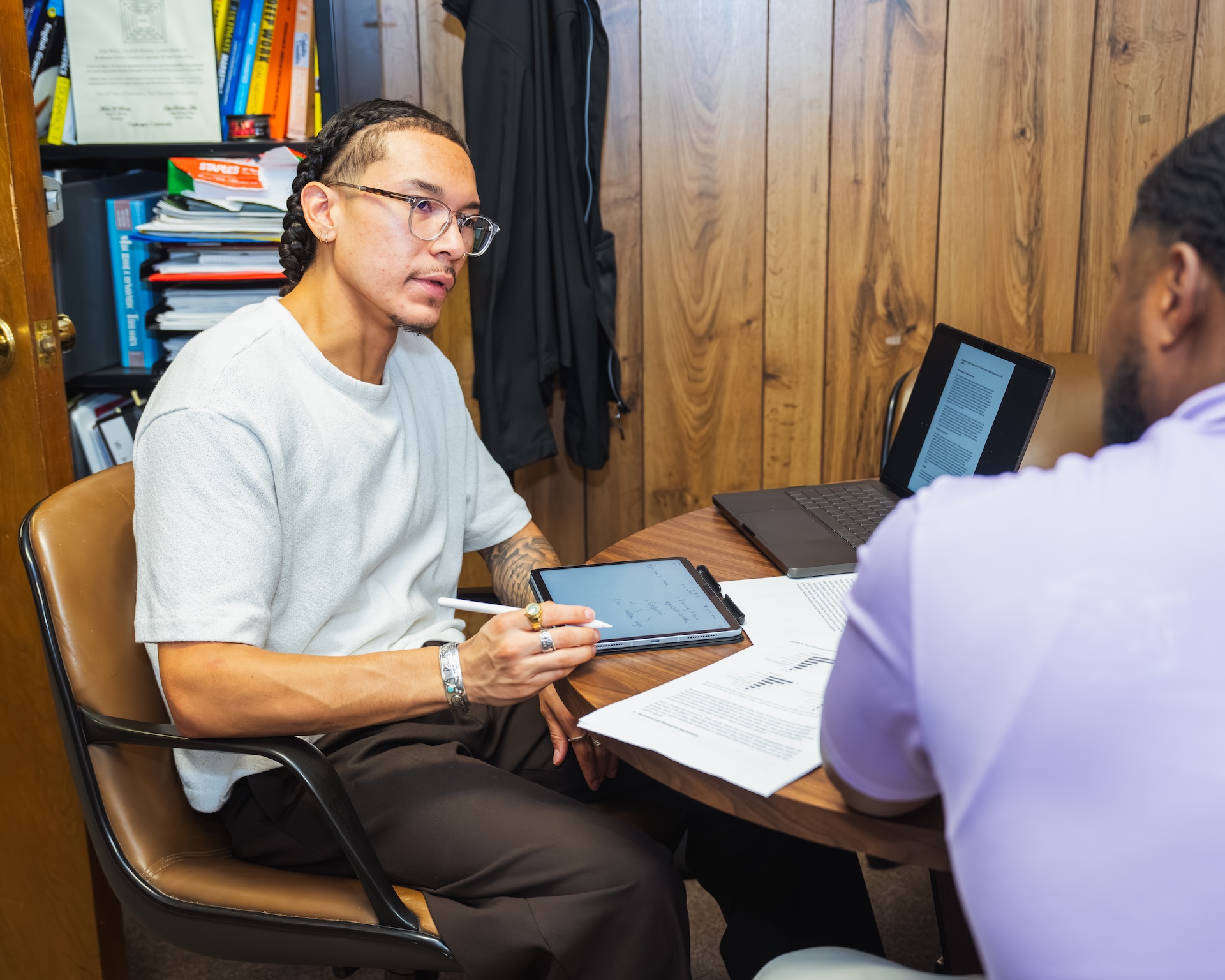 He chose the agricultural economics master’s program to equip himself with the skills and mindset to help communities develop economically. His passion for community-level economic development comes from his experiences as a member of the Northern Arapaho Tribe on the Wind River Reservation in Wyoming.
“I have a culture that grounds me and should be shared. Eventually, I would like to serve as the chairman for my tribe. I believe I can help strengthen our economic system,” he said. “When you look across the globe, you see nations that are thriving while others struggle on the poverty line. It is no different within the United States, and I believe this disparity needs to be addressed. My degree from K-State will help me understand the root causes of these issues and equip me to facilitate meaningful improvement.”
As a complement to economic stability, Alexander has channeled his focus into sustainability.
“Sustainability in agriculture is on the rise,” he emphasized. “Within the last few decades, light has been shed on the need to conserve more water, preserve the soil, lower our carbon emissions. When we study these things, and we really tie the numbers and the mission into it, we help the general population understand what they can do that will help the environment too.”
Working alongside Dr. Hobbs, Alexander has expanded his interests to study sustainability and urban food systems through work on consumer perceptions in the pet food industry. His graduate research is examining how sustainability messaging influences consumers and he is analyzing purchasing behavior.
“We’ve found that sustainability is not going to act as a primary driver, but more so a secondary one that enforces the core ideas people are worried about when they buy pet food,” he said. “This looks like nutrition, price, quality and safety.”
Alexander’s research will continue to inform his education around sustainability in agriculture. Eventually, he hopes the skills he gains through agricultural economics can one day help improve economic conditions, food systems and environmentally safe practices within tribal communities.
While he is interested in supporting his own tribal community, he’s also attracted to gaining experience around the world, particularly in regions facing severe food insecurity.
“I’m interested in working with a nonprofit organization in a different country … to help out communities that are less fortunate than I am,” he said. “There is a lot of work to be done, and I believe I would enjoy helping with food security. My goal in the agricultural industry is to equip myself with the skills and the mindset that I can take to those communities and help them develop economically.”
For Alexander, the goal has always been bigger than a graduate degree. Surrounded by a community of mentors and peers who have made K-State feel like home, he’s focused on tackling big problems like food insecurity, economic stability and sustainability while preparing for a career built on leadership and service.