Meet Vera Adabrah-Danquah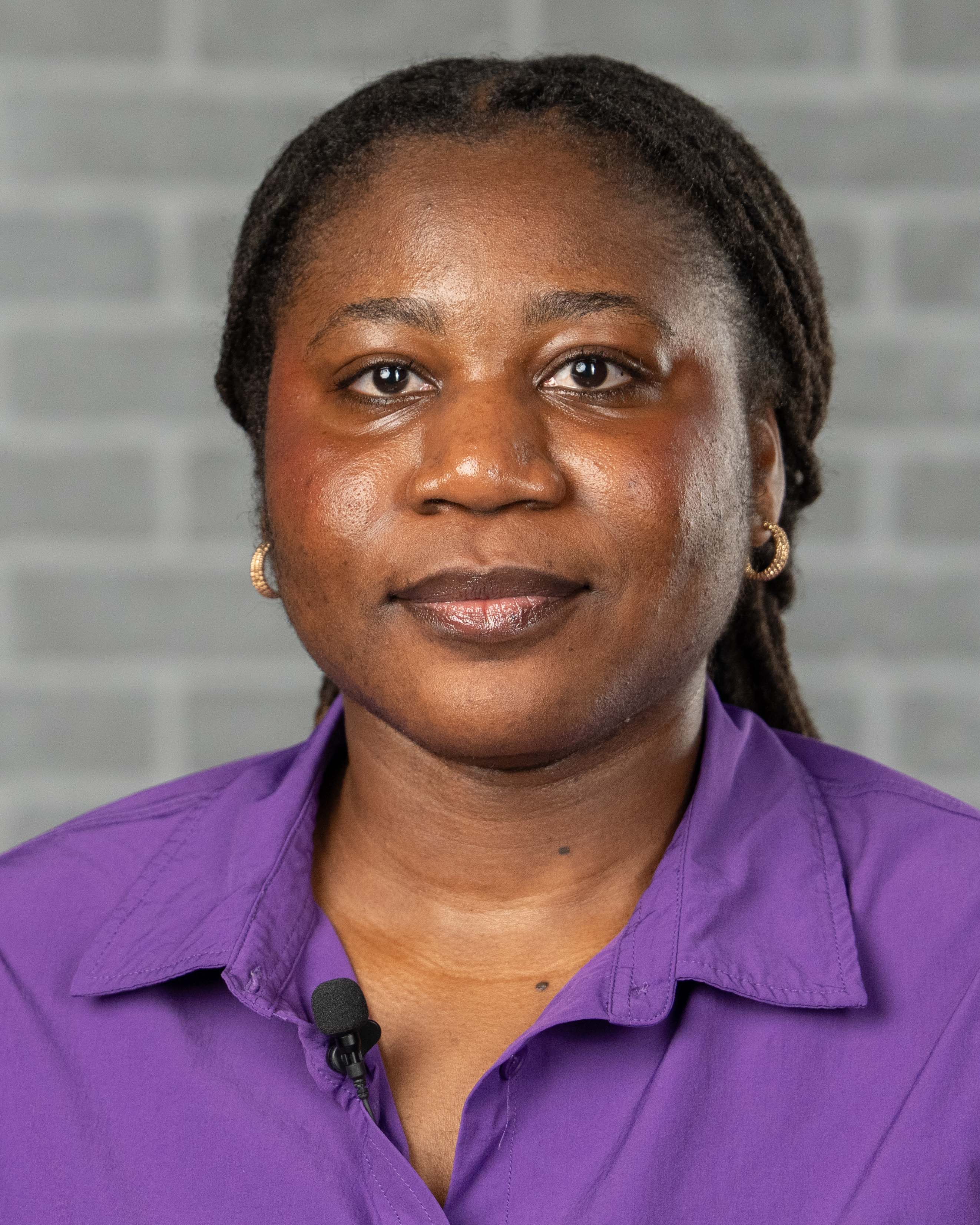
Major: Agricultural Economics
Expected graduation year: 2026
Hometown: Accra, Ghana
Background
There’s a misconception among students in Ghana that the only career path in agriculture is to become a farmer. That idea nearly led Vera Adabrah-Danquah away from the industry she would later come to love.
In high school, her principal pushed her to take classes focused on agricultural science, which instilled a deep passion and curiosity about consumers, production and the industry as a whole. Still unsure about the opportunities ahead of her, Adabrah-Danquah took a leap of faith and continued pursuing agriculture.
She earned her undergraduate degree in agribusiness at the University of Ghana. While attending, she found a strong role model in a female mentor, who shaped her path as a woman in agriculture and an advocate for the industry. Her commitment to further her education in agriculture led her to K-State, where she is now pursuing her doctoral degree in agricultural economics.
“I'm studying agricultural economics and specifically consumer demand because my mantra is that not everyone is a farmer, but everybody is a consumer,” said Adabrah-Danquah. “Understanding how consumers behave toward the food system, agricultural policies and food supply shocks is just interesting to me.”
More than an education
Adabrah-Danquah is active across campus at K-State. She’s a member of the African Students Union, the Agricultural Economics Association and a case study club, as well as an avid supporter of K-State volleyball. Beyond the relationship she’s built with her advisor, Logan Britton, associate professor of agricultural economics, she credits these experiences with helping her feel welcome, connected and supported on campus.
However, these activities don’t just make her feel at home. They’ve led to some incredible opportunities that have elevated her education. Through the case study club, students travel nationally and internationally to compete with other agricultural economics students from various universities and solve real-world issues. Adabrah-Danquah traveled to Spain with the International Food and Agribusiness Management Association and traveled to Denver, Colorado, for the annual meeting of the American Association of Agricultural Economists.
Because of her success with the case study group, Adabrah-Danquah was encouraged by Britton to get involved with Farm Foundation, where she was invited to participate in its exclusive Round Table. Farm Foundation connected her with an industry mentor, provided an opportunity to present her research and gave her a seat at the table for dynamic conversations about the future of agriculture. Her mentor introduced her to connections she wouldn’t have gained on her own, and the network is one she can rely on regardless of where her career takes her.
Understanding consumers
Like all Ph.D students, the central focus of Adabrah-Danquah’s degree is her research. She works with Britton, her major professor, and studies consumer awareness and behavior regarding animal diseases, specifically foot-and-mouth disease.
From her quantitative data, she found that the majority of the audience she surveyed had greater awareness of foodborne illness caused by Salmonella than of FMD.
“Specifically, what I'm studying is consumers' preferences around Foot-and-Mouth Disease. It’s a very abstract thing because Foot-and-Mouth Disease affects cattle, and we know that Americans love beef. The unique thing about FMD is that it kills cattle, but the meat is completely safe to eat. Consumers will listen to the news and others’ perceptions, but don't take time to go into the actual research,” Adabrah-Danquah said. “My research is about educating people about Foot-and-Mouth Disease so that the U.S. is prepared in case of an outbreak.”
A key component of the research involved exploring who consumers trust most. Participants were presented with a list of sources, such as government agencies, restaurants, doctors and veterinarians. The results indicated a lack of trust in restaurants among the sample, which contradicts the fact that people often choose to dine out without concern about where their food comes from or how it is prepared.
“Every single day, whenever I go to buy something, I'm asking myself, ‘Do I ask questions about the food I'm eating? Do all consumers ask questions?’ You might think that consumers just care about prices, but they care a lot more about other things in the food system beyond prices,” said Adabrah-Danquah. “For example, with Avian Influenza, egg prices soared, but consumers were also concerned about the safety of their food. That made me interested in studying consumers.”
A future to be proud of
After earning her doctoral degree, Adabrah-Danquah intends to pursue a career in academia. Through her graduate studies, the opportunity to be in the classroom and conduct research has significantly shaped her career path.
“Last semester, I taught a class. I learned a lot from my students, and I hope that they learned from me,” said Adabrah-Danquah. “While teaching, I still want to do some research because research is how you make an impact on people’s lives and push policies to change.”
She is committed to becoming an influential mentor to future agricultural students, just as she was guided by her own mentors. She hopes more students like her realize the importance of studying agriculture and the opportunities available.
“Agriculture is what feeds a nation,” said Adabrah-Danquah. “Don't run away from it. Study it. Love it. Because you're doing a good thing. You are ending hunger, and that's something that you should be proud of.”