Alumni Spotlight
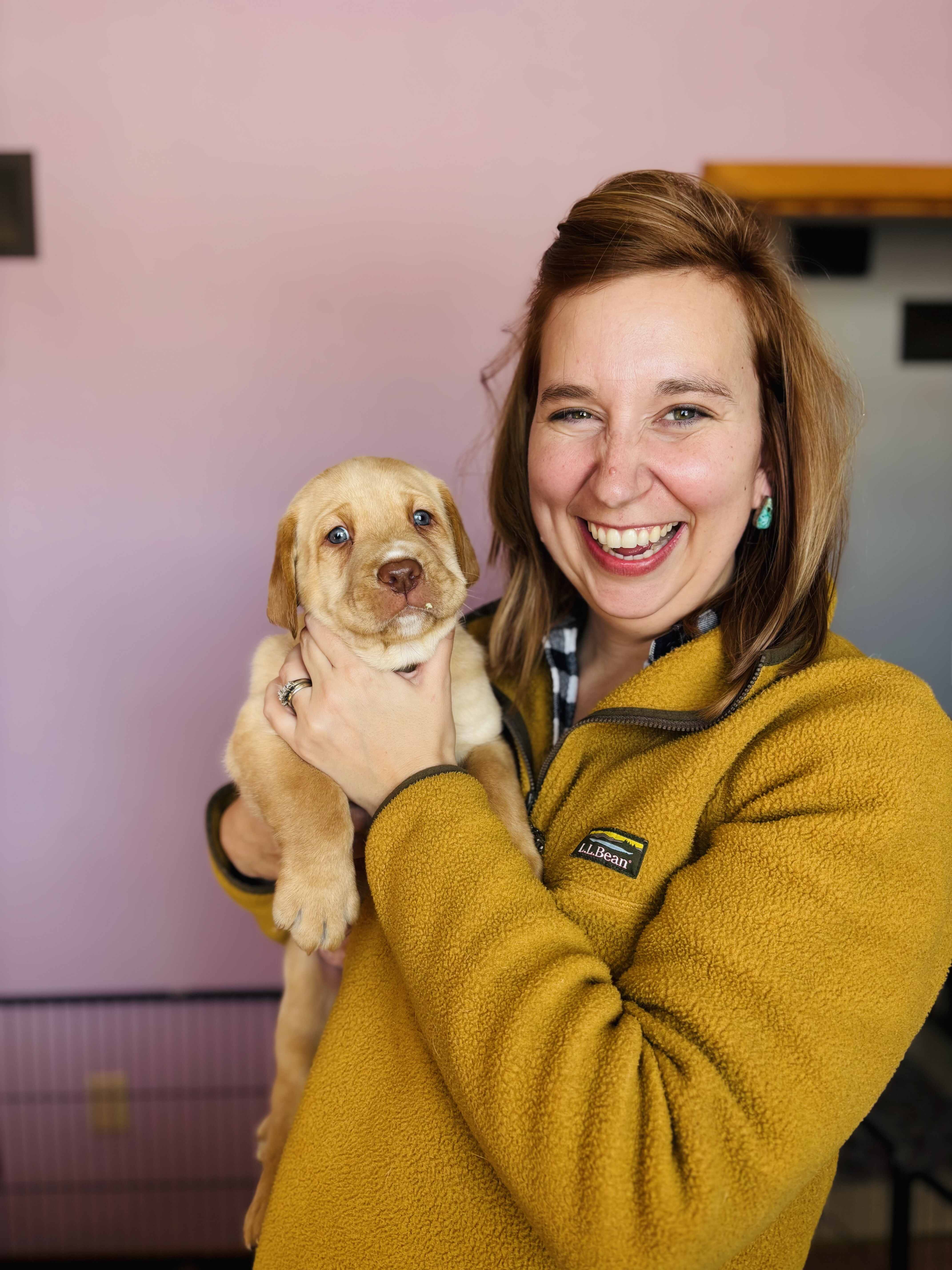
Name: Alissa Kirchhoff
Current Title: Veterinarian
Organization: Black Dog Veterinary Services
Majors:
B.S. Animal Science and Industry '12
M.S. Bovine Reproduction '15
DVM Veterinary Medicine '17
K-State College of Ag is proud to recognize alumni from all departments who continue to pursue their passion in their respective fields. It is through experience that we continue to grow as individuals and stewards of the industry. Through those experiences, we hope to be a continued resource for the next generation of K-State students to lean on for advice and continue to build our network!
Why did you choose K-State?
I knew right away that K-State was going to be my pick. I remember visiting prior to starting and feeling so welcome. Everybody was very much there to help us learn and help us explore our interests. What kept me there was the feel of the campus. You always hear that it feels like a family, and it’s absolutely true. People cared about you, personally and academically. I don’t have a background in agriculture, so I’ve always felt the College of Agriculture was very welcoming and didn’t care that I didn’t have the same background as many of my classmates.
What’s something unexpected you learned from your degrees?
It taught me how to learn, be curious and that it's OK to say, “I don’t know, but we’ll find out together.” I remember worrying that because I didn’t have an agriculture background, that I would be behind my peers. That was not at all the case. If you want to learn something and you have people around you who want to teach you, you are set up for success.
I also learned that it was always OK to not get something right. Our professors and peers were always there to help you learn so you could always try again. Failure was just another way of learning. That stuck with me into my career. As a veterinarian, you rarely get it right the first time, so I always appreciate the approach that we can learn from curiosity and failure.
How did your time at K-State College of Agriculture influence the way you run your veterinary business?
It was always clear that my professors had lives outside of their job. Sometimes we’d see professors have their kids in the office during the summer or on their days off. It was clear they loved their career and were passionate about research and teaching, but they also loved their families and had things going on outside of K-State. They modeled that balance. We learn by watching other people go through experiences. They knew I wanted to have a family, and someday a practice, so they were honest about the challenges of that balance. Now, in my own career, when I’m having similar challenges, I look back on those professors and know they gave themselves grace.
How did you start your practice, Black Dog Veterinary Services?
I started at a traditional mixed-animal practice with just two veterinarians. I loved it. We were extremely busy, and it wasn’t really conducive to having the family life I wanted. My husband farms, and we cover a pretty large territory of clientele, so I needed more flexibility to be home at certain times. On a whim, I decided to open a house-call practice. My favorite parts of working with clients were getting to know them, and I knew that animals were calmer at home. It worked; I had people in this community who were willing to take me as their veterinarian, and I’ve gotten to develop great relationships with them over the years.
I love palliative and hospice care, and I didn’t feel like I was able to give the attention it deserved in the clinical setting. Now, in a house call setting, I can really walk families through that. Dogs I was seeing as puppies, I’m now helping families say goodbye to. You get to see them through all of those steps, and I absolutely love it.
What does a week in your life look like?
I’m part-time now because I have four little kids, so I work three days a week and try to pack those days as tight as I can. There are slow days when I’ll see three or four animals, and there are crazy days when I’ll see upwards of 25 and be touching every corner of the county. I may go from seeing a puppy, to putting a dog down, to going to community meetings. They’re busy, exciting, fun days. My goal every day is to have fun, and so far, every day has been fun. It might be hard and exhausting, but they’re fun days.
Tell us about your book, “Good Girl, We’ve Loved You So.”
Several years ago, my own dog died very suddenly, and I was underprepared to talk to my little girls about the dog’s passing. I had helped all of these families with their dogs who had passed away and walked them through grief, but when it came to my own daughters, I just didn’t know what to say.
Writing is how I processed things. I wrote the book about our dog, and then sat on it for a bit because I wasn’t sure what to do with it. As I helped other families with conversations after my own experience, having a hard time talking to kids about what happened was a pretty common thing.
I found another veterinarian who is a very talented artist, and she was willing to illustrate for me. Together, we figured out how to publish through Amazon and the Adobe Creative Cloud. It was a cool experience, and I’m glad that I have that resource now for families.
Talk about your community involvement.
In a small town, you pull in with a moving van, and they’re there asking for your help. They want to know where you’ll fit into the community. I was really fortunate to be able to join our county Farm Bureau board and be on our library’s board the month I arrived. I got to meet other people through those, and I learned that I loved serving my community in that capacity.
While I’m not on those boards anymore, I’ve kind of built from them. My husband and I are now our state district representatives for Kansas Farm Bureau’s Young Farmers and Ranchers Committee. My library board experience translated to different things, and now I get to chair our hospital board. I get to learn about different aspects of my community in a way that I’d never expect.
Why is being involved in your community important to you?
People did not have to take a chance on me when I first arrived here. I am not from here, and I don’t look like the traditional veterinarian here. People went out of their way to help me when I arrived. I really feel like it’s my turn to go out of my way to help others here.
I also look at my kids. I feel so privileged that they get to live in this community, and I want to make sure the community is here for them if they want to come back. Maybe even better than what we have today.