K-State Crops Judging: A Century-Old Dynasty
One of K-State’s best-kept secrets lies at the heart of the College of Agriculture. With 50 national champion titles between two competitions, the historic crops judging team’s reputation often precedes them. Many may not know what the team truly does, but they know the legacy and revere the team all the same.
Since 1923, the crops judging team has competed and held their own at the Fall Collegiate Crops Contest, where they’ve won 34 national championship titles — 22 of them since 2000. The contest consists of seed identification, seed analysis and grain grading, three events K-State’s team is known for.
Additionally, K-State started competing in the national NACTA Crops Contest in 1996. With only 30 years of competition, K-State already holds 16 championships, with 14 since 2000. Here, seed identification, lab practical, a knowledge exam and agronomic calculations make up the events.
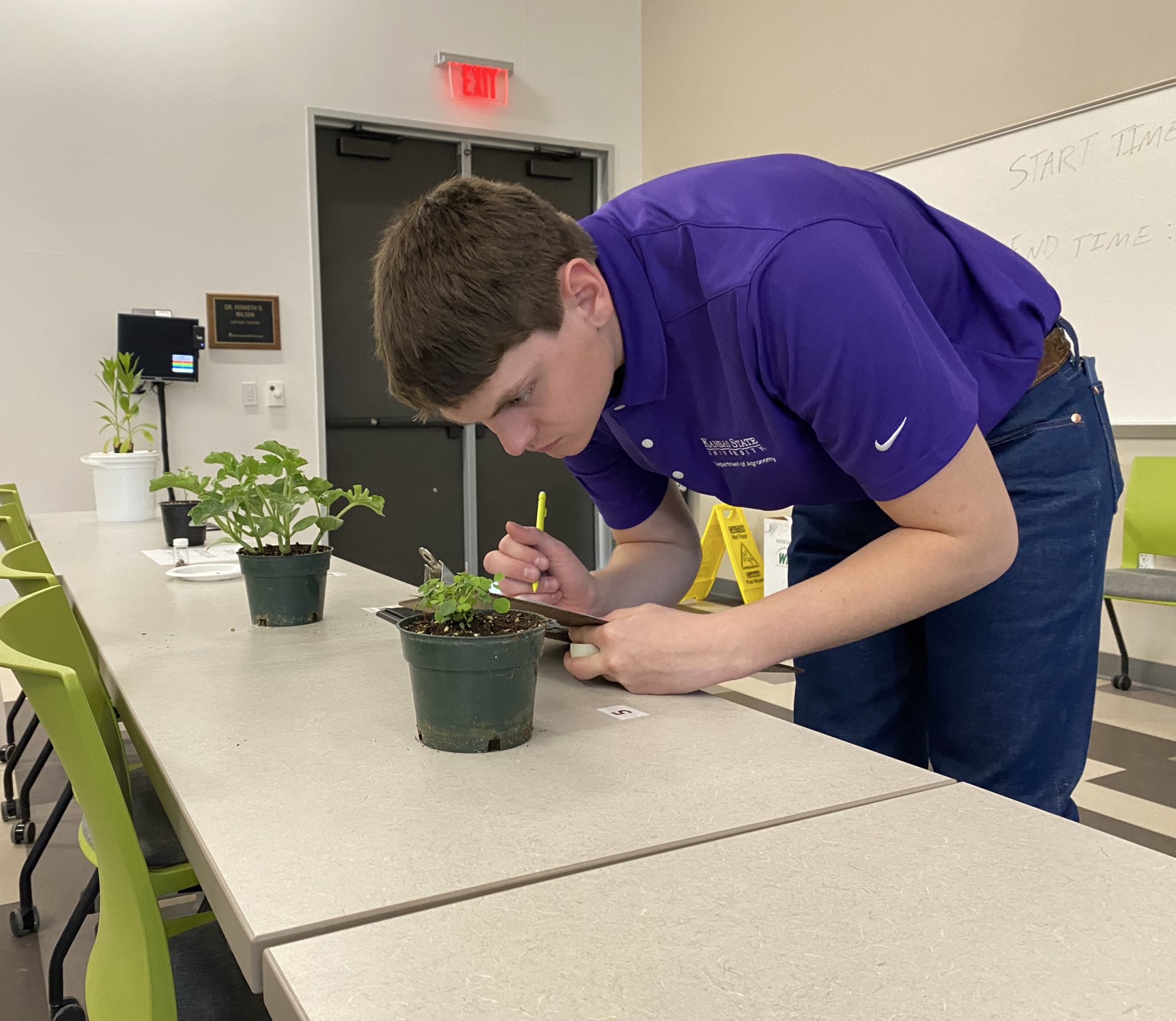
The team’s most recent success came at the 2025 fall contest, where the coveted 34th national title wastaken home, making K-State owners of a third of all titles since the contest’s creation.
The team’s success is built on the achievements of its talented members. Karlie Albright, a senior in agricultural education, took first overall at the contest. She was an All-American and finished first in all three events. Collin Mills, a senior in agronomy, placed third overall. He took second and was an All-American in seed identification, third in grain grading and fourth in seed analysis. Ella Pachta, a senior in agricultural education, took fourth overall, was an All-American in seed analysis and plant and seed identification, and took fourth in grain grading.
A look back at the beginning
The fall contest began in 1923, and while it has remained in the Midwest, other elements have changed with time.
“The fall contest, when it first started, was actually an add-on to the livestock show,” Dr. Rachel Cott, the coach of the crops team and an assistant professor in agronomy, said. “Grain and feed were for livestock, so that’s how it was tacked on. The overall gist of the contest hasn’t changed a whole lot, but the types of crops they’re asked to grade have changed.”
Cotton and alfalfa used to be a part of the judging, but were eventually phased out to give priority to grains like corn, soybeans, wheat, barley and more. Since the fall contest follows the Federal Grain Inspection Service standards, the events evolve alongside them to ensure the competition remains relevant and students benefit from the experience.
“When this contest was developed, the idea was to train students who could work as federal grain inspectors,” Cott said. “Now there are not a lot of students who go on to do that anymore. Still, identification, problem solving and attention to detail are really useful skills that employers across agronomy-based careers look for.”
Continuing a dynasty
Carrying on the legacy of K-State’s crops judging team is no small task. As members attend practices and travel to represent the school on a national level, the dynasty travels with them.
“It pushes you to do even better,” Mills said. “Being a part of a team where people want to succeed, and people in the past have succeeded, is a lot of fun. I’m glad I could continue this dynasty and be a part of it.”
Albright echoed Mills’ statement, saying that everyone has a lot of pride in competing, knowing that team members before them have had such strong success.
“It’s definitely something that sets the K-State team apart,” Albright said. “We have to uphold the expectations that we have. We know that our teams have been successful in the past and how much time it took to prepare. We know what that takes for ourselves.”
Cott knows the historical legacy can weigh on students, and they don’t want to be the ones who mess up. However, the experience of continuing greatness and being part of the historic team outweighs anything else.
State-wide support
Support for the crops judging team comes from all over the Manhattan community and beyond. From social media and the K-State student body to those who aren’t involved in agriculture, the legacy continues to draw people in.
When Cott first took over the helm of the crops judging team, the organization didn’t have a presence on social media. After creating X and Instagram accounts, the team quickly found traction and more support.
“I started posting pictures and videos of the national contest, and one of our posts got over 1.5 million views in 24 hours,” Cott said. “The outpouring of support this team has continues to blow my mind.”
The K-State sports world is no stranger to supporting the crops judging team, either. After large rivalry games, K-State fans flood social media with posts about the crops judging team’s national championships. ESPN’s “College Gameday” even gave the team a special shoutout in 2023, as the celebrity guest called out the historic championships.
“We all know that the crops judging national championships have been talked about a lot, especially in the sports world,” Albright said. “They say K-State doesn’t have any national championships, but then crops judging comes into play.”
Working with the K-State Foundation, the crops judging team found another area of support: sponsorships and funding for their national contests. The relationship between the team and the Foundation led to partnerships with commodity groups, industry companies and Kansans wanting to support the crops judging team.
“We have a really great sponsorship program that has allowed me to take more students to contests than K-State has ever taken because we have the money and support to do so,” Cott said. “Seeing support that comes from way beyond the College of Agriculture is really cool.”
Spring preparation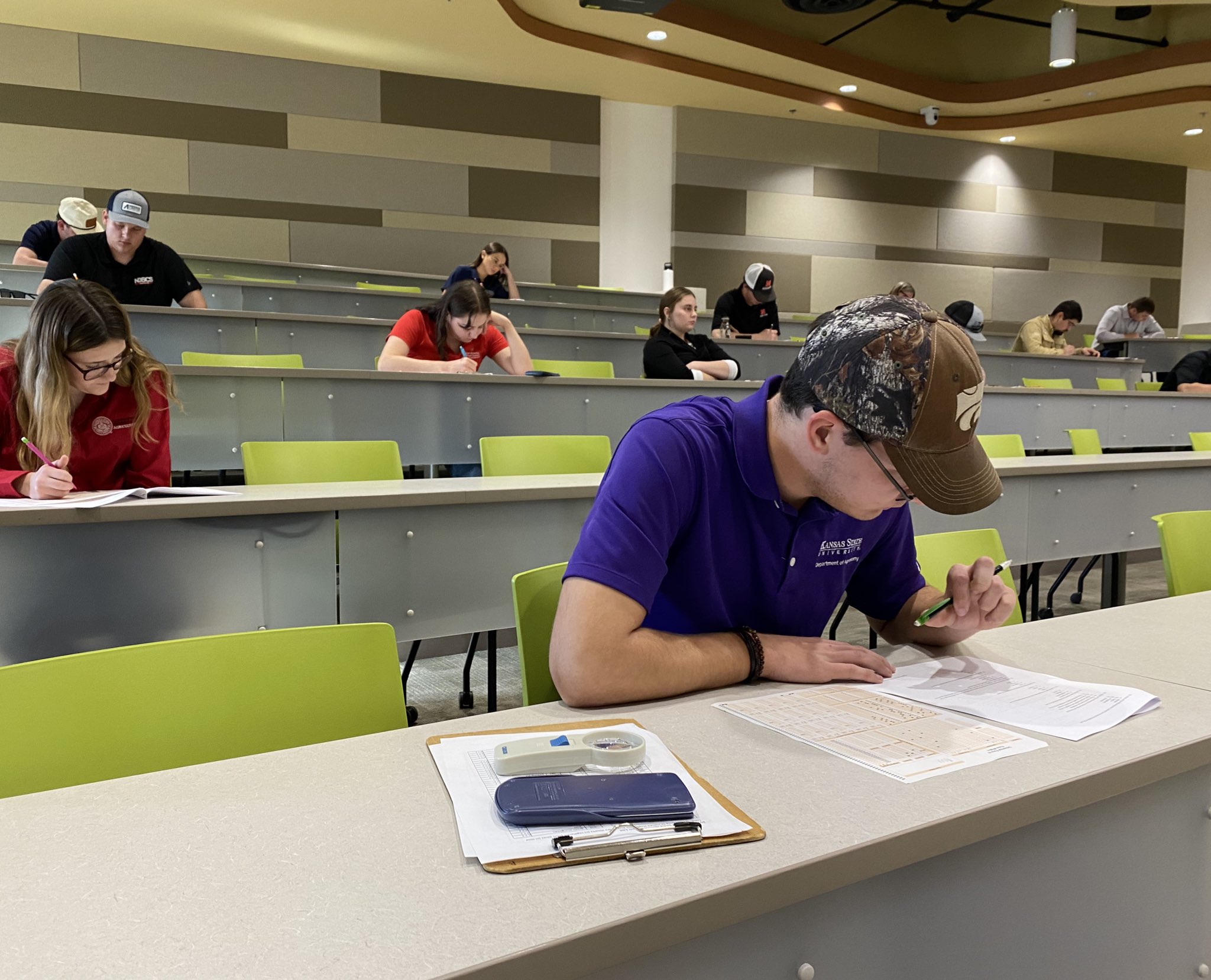
The crops judging team has been gearing up for this week’s spring conference with weekly practices and regional competitions. At practices, coaches and students prepare quizzes and review presentations to best prepare for the wide-ranging content at NACTA, including soil fertility, crops staging, herbicide modes of action and seedling identification.
Spring practices also bring a different element than fall practices: math tests. The spring contest features a test with practical, farm-based calculations, like figuring out how many bags of seed are needed for a field, the capacity of a grain bin, dockage when selling grain and more.
Getting involved
The team welcomes all majors. For students interested in joining the crops judging team and competing for K-State, team members echo two pieces of advice: dedication and preparation.
“It does take a lot of time,” Mills said. “I think I spent a minimum of six to 10 hours a week studying. But if you put that time in, it feels good to be a part of a team like this. The feeling of winning at the end is great.”
Students across the board commented on their positive experiences with the team: not just continuing a legacy, but also having fun.
“It was a really good experience,” Albright said. “I’m so glad I got involved with it. There’s a lot of pride in being part of this team and in the success we achieved. A lot of time goes into it, and to be able to see that pay off is really fun.”
To keep up with K-State crops judging, follow the team on Instagram or X (formerly Twitter) @KStateCropsTeam.